Nassau County Black History
Black resilience and entrepreneurship along Florida's Atlantic coast.
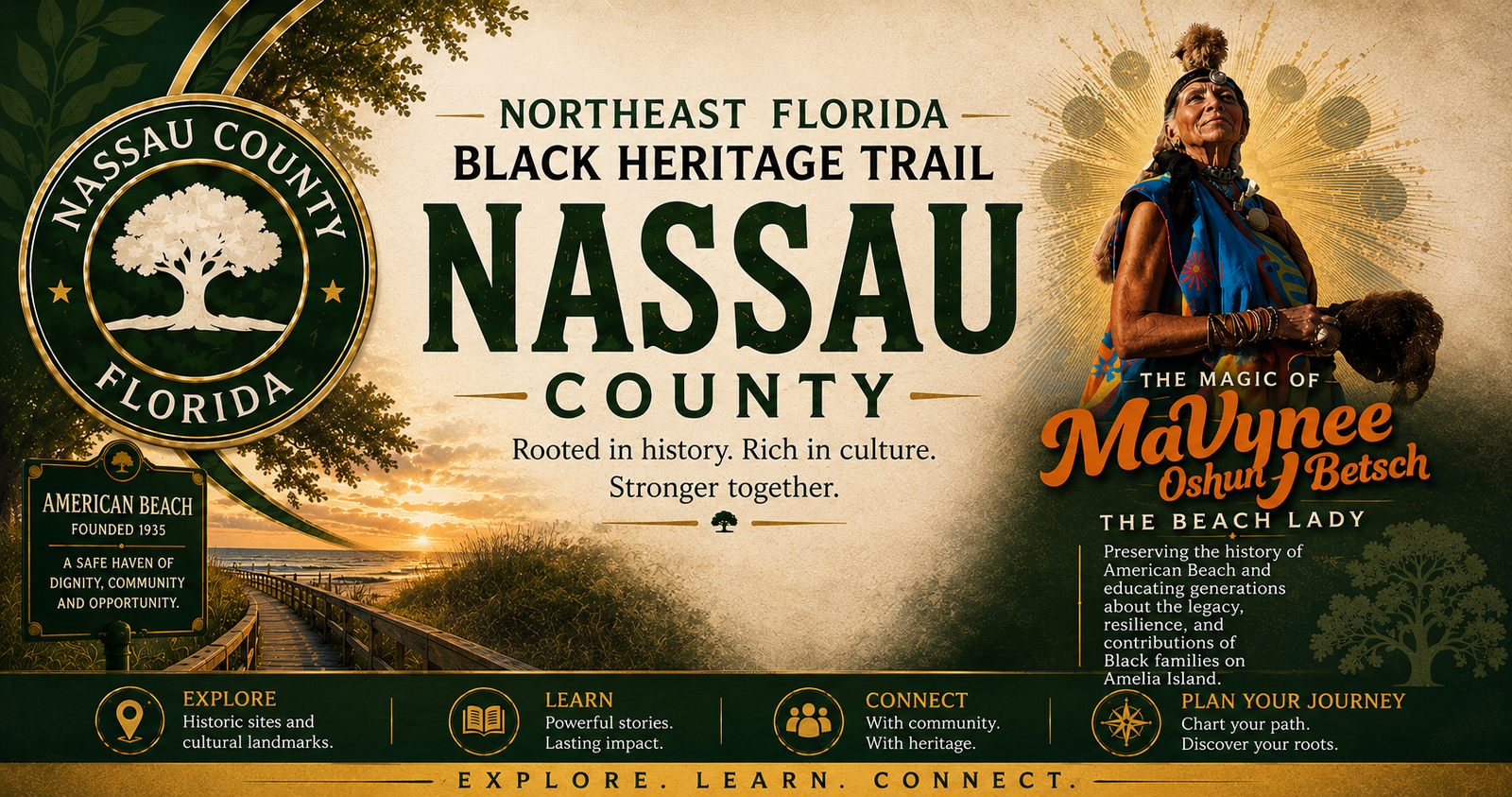
Nassau County, anchored by Amelia Island and the city of Fernandina Beach, tells the story of Black resilience and entrepreneurship along Florida's Atlantic coast. From the maritime heritage of Fernandina to the founding of American Beach, the county holds sites central to the African American experience in Northeast Florida.
Fernandina Beach is home to a UNESCO Slave Route Project marker and the historic Bosque Bello Cemetery, while the Gullah Geechee Cultural Heritage Corridor runs through the county, celebrating the enduring traditions of African-descended coastal communities.
Explore the heritage sites below, then discover American Beach in depth on its dedicated page.
From the historic American Beach community to Fernandina's maritime heritage, Nassau County tells the story of Black resilience and entrepreneurship along Florida's Atlantic coast.
Heritage Sites
Historic places to visit
Preserves the history of American Beach and celebrates the legacy of A.L. Lewis and the vibrant resort community he created.
The original section of the cemetery is thought to have been established in 1798 but the oldest identifiable grave, of French Soldier Peter Bouissou de Nicar, dates from 1813.
In 1858, the first Bishop of Florida laid the cornerstone of the first St. Peters Church in Fernandina on the southeast corner of what is today St. Peters Cemetery.
The Slave Route: Resistance, Liberty, Heritage addresses the history of the slave trade and slavery through the prism of intercultural dialogue, a culture of peace and reconciliation.
The Gullah Geechee Corridor celebrates, preserves, and shares the important contributions made to American culture and history by African Americans known as Gullah Geechee people.
Plan your visit
Explore more of the trail
Discover more destinations
Other Black heritage destinations
The "Harlem of the South" and a crucible of the Civil Rights Movement in Northeast Florida.
450+ years of African heritage, from Fort Mose to the 1964 Civil Rights Movement.
A historic Black oceanfront resort and a jewel of the Gullah Geechee Cultural Heritage Corridor.
From the Great Migration to the modern Civil Rights era in Jacksonville and beyond.
Centuries of African American heritage, from the Spanish colonial era to the Civil Rights Movement.
Agricultural roots, faith, and community-building along the St. Johns River.
Reconstruction-era churches, river-town entrepreneurship, and civil rights activism.
Early settlements, Rosenwald schools, and enduring community institutions.
Have a story or site to share?
Help us preserve and grow the Nassau County heritage record. Connect with us to suggest a historic site, partner with the trail, or learn how to get involved.